|
THE OLD SCHOOL PRESS
An occasional newsletter about forthcoming
books and events |
|
March 2024 In this newsletter . . . progress on: Plates for a herbal an update on: Washi Memories artworks inspired by Punting to Islip
|
|
THE OLD SCHOOL PRESS
An occasional newsletter about forthcoming
books and events |
|
March 2024 In this newsletter . . . progress on: Plates for a herbal an update on: Washi Memories artworks inspired by Punting to Islip
|
|
progress on Plates for a herbal |
Work progresses on this new book on the history of printing at Oxford University Press. | |
|
Planned for summer 2024 |
| |
|
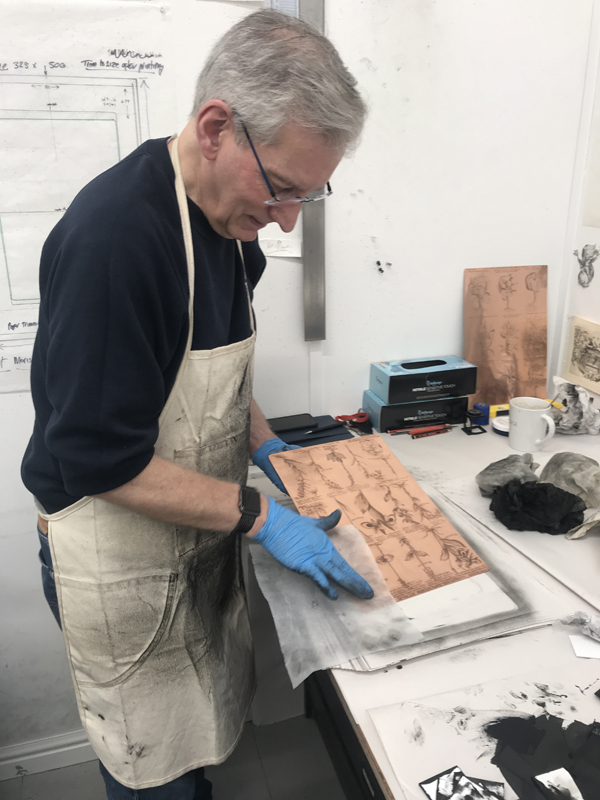
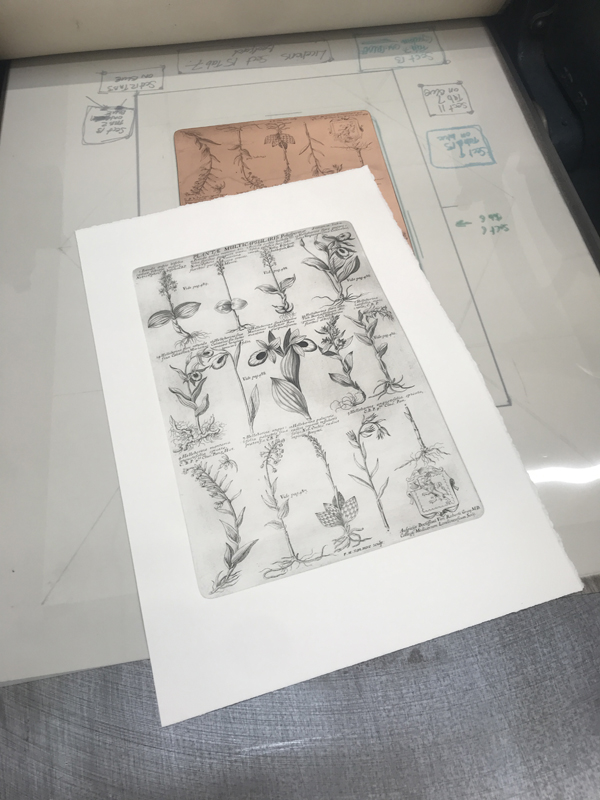
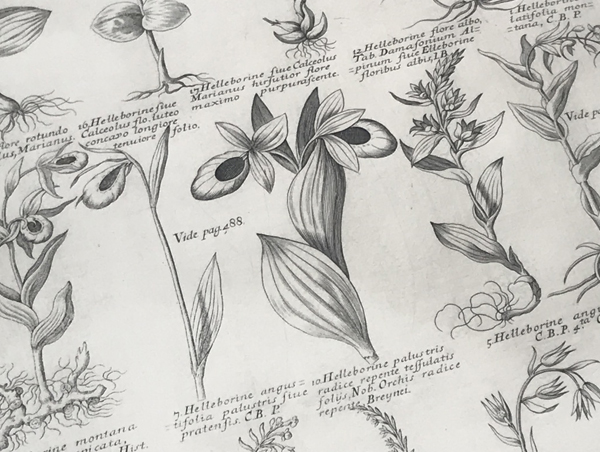
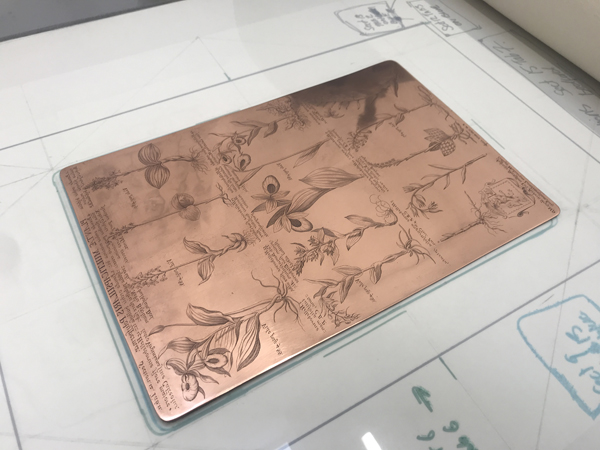
Work on this book currently proceeds on two fronts: printing the twelve original copper engravings that will feature in the book, and printing the texts that describe them and their contents. In this newsletter our focus is on the work of Master Printer Jim Nottingham who is now well into the laborious task of pulling forty impressions from each of the twelve plates. The plates were engraved for Robert Morison's herbal titled Plantarum historiae universalis Oxoniensis published in 1680. The time of their production, their age, and their life so far naturally show in places, with varying thickness and some curvature, plus some faint superficial scratching - all challenges for Jim. Preparation of the plate is crucial and most of his time is spent inking and cleaning back the plate before it goes on the etching press. The whole process for a single pull takes around a quarter of an hour. We have archives from the 1670s that suggest that the rolling-pressman who printed the plates, a John Cheney, was able to take perhaps seven an hour, possibly working twelve hours a day, six days a week. (It's not known if he had help!) Once the entire plate has been covered with ink, pressed into the engraved areas, the surplus ink is removed from the unengraved surface of the plate with a succession of rolls of tarlatan cloth and finally with tissue paper. The plate that Jim is working on here is titled Plantae multicapsularis polyspermae and it illustrates species of orchids.
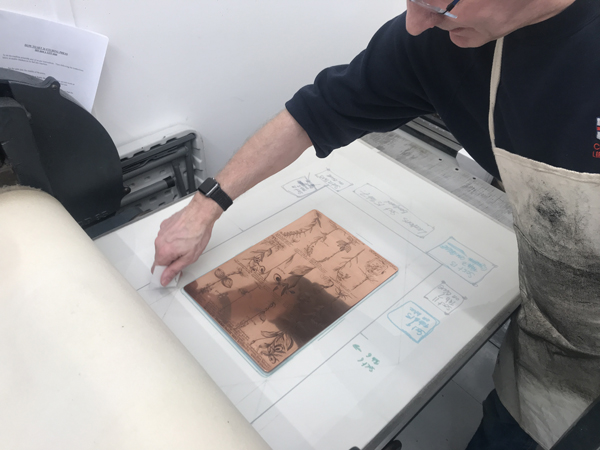
Once cleaned, the plate goes on the bed of the etching press, carefully positioned.
A sheet of dampened Rives BFK is in turn carefully positioned on top of the plate, and then blankets are rolled over the paper.
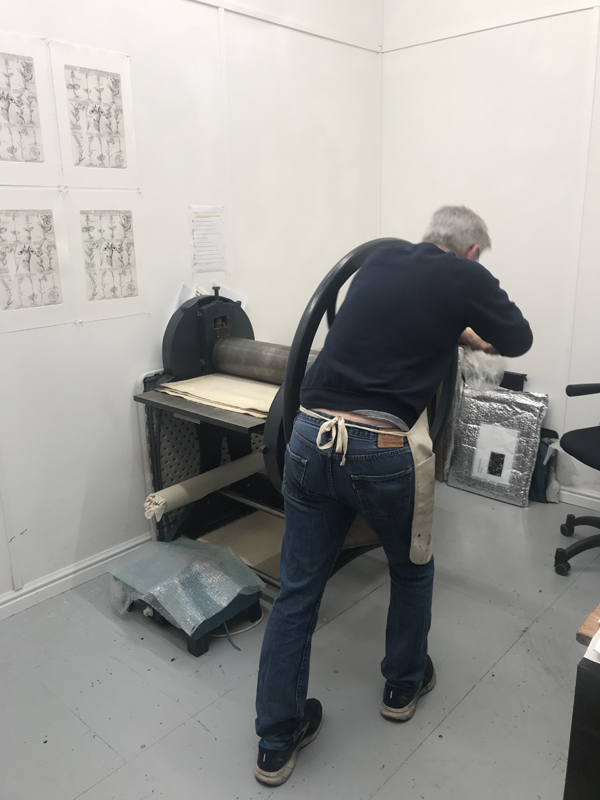
The physical side of printing: the bed of the press with its plate, paper, and blankets is passed beneath a steel roller, forcing the paper into the engraved marks to receive the ink. This is the tough bit.
The printed sheet is peeled off the plate.
And here is the final result.
A close-up shows just how exquisite these engravings are.
Finally, a photograph of one of the plates: they are beautiful objects in their own right, in such great shape after three and a half centuries. It is a great privilege to have been given permission by the Bodleian Library to take pulls from them. I hope to be able to cover the Library's interest in the materiality of the plates in a future newsletter.
If you are interested in this book and haven't already let us know, drop us an email. Our current expectation for the binding is as follows: the book will be quarter bound in faux vellum with a printed paper on the boards, and the plates will be loose in a portfolio, the book and portfolio resting in a cloth-covered solander box. Each copy will contain pulls from five of the twelve plates. There will be just seventy copies or so for sale. Price to be determined. | ||
|
progress on Washi memories |
We are planning a box for the book. | |
|
| ||
|
Artworks inspired by Punting to Islip |
at gallery 57 in Arundel | |
|
3 February to 27 April 2024 57 Tarrant Street Arundel, West Sussex, UK
|
||
|
Introducing her work, Eleanor writes 'Printed on Japanese kozo paper, the layout of this narrative poem mimics the meandering river. The poetry of the printed word takes on a new form as the paper is slashed, rubbed and rolled into thread and layers of printed script are reminiscent of ikat or shibori tie-dyed threads.'
| ||
|
|
click to see an index of our newsletters
| |
|
Copyright © Martyn Ould 2024 | ||